Passion VS Profit
A glimpse into the US arts industry
From aspiring creatives to practiced artists, finding a lasting career outside of artistic hotspots like California and New York can seem grim. Despite this, nearly 1 in 10 U.S. artists were employed in Texas in 2021, according to data profiles from the National Endowment for the Arts.
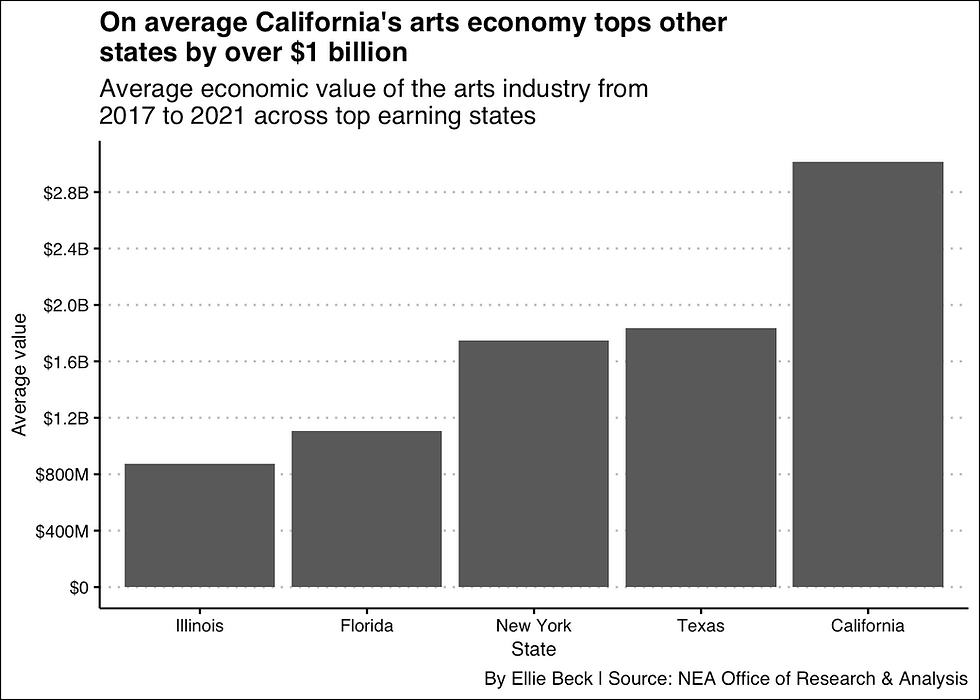
The NEA's Office of Research & Analysis and the Bureau of Economic Analysis produce data profiles that contain information about the size of the arts industry and its contribution to the U.S. economy. Recent records demonstrate employment and value trends for the arts industry from 2017 to 2021.
During this five year period, the economic value of arts industries nationwide increased by nearly $4 billion, showing a 20% increase in value overall. However, employment numbers from the same period decreased by about 130,000 people, roughly the same size as the population of Waco, Texas.
Fawn Moffat, a 23-year-old tattoo artist living in San Marcos, Texas, said the country’s focus on profit over passion makes people pursue art less. With job losses during the COVID-19 pandemic and current issues with livable wages, Moffat said many people are focused on survival, not expression.
“I think there's a whole lot about the system that is just so unfair,” Moffat said. “I'm hoping as time goes on America can be more of a place where people can thrive and not a place where people just suffer and struggle.”
Moffat, who uses they/them pronouns, was self-taught and is currently self-employed. They said they admire other independent artists in their community who have developed new ways to not just create art, but also make a career out of it.
In Texas, independent artists increased 6% from 2017 to 2021, representing a slightly higher increase than the change in employment across all arts industries. Nationally, however, independent artists decreased by nearly 15% during this time.
Even artistic hubs like New York were hit with arts employment decreases, losing almost half a million artists over the course of this five year period. Leighton Branaugh, a 20-year-old musician living in Brooklyn, New York, said even though New York City has a higher cost of living than Austin, musicians in both cities are paid about the same.
Branaugh grew up in Texas and spent years booking, organizing and playing shows in cities all across the state. In July of 2023, he moved to Brooklyn and dove into its music scene. Since then, he said he’s seen many things that explain why some artists have left.
“They don't stop raising prices in every neighborhood, and it just drives people out of the city and into places like Austin, and then it starts happening in Austin,” Branaugh said.
According to Branaugh, this cycle and other issues within the arts industry have happened nationwide. Brooke Alyea, a 21-year-old musician and music business student living in Nashville, Tennessee, said support for the arts typically comes from the community, not the government.
“Tennessee government loves Nashville, and it being the tourist trap that it is now, because it brings so much fucking money for them, but they haven't done anything to protect artists and musicians’ income,” Alyea said.
In 2021, the arts contributed over $23 billion to the U.S. economy, but Alyea said corporations are the ones seeing a majority of the profits. Alyea said these corporations care about content rather than creators, leaving it up to government policies to generate stability and security for artists.
“They don't give a fuck about who's doing the content, and that needs to change because we're supposed to be a country that prioritizes intellectual properties, and it's not prioritized anymore,” Alyea said.
Both Alyea and Branaugh said that some places in the U.S. were noticeably more encouraging of artists than others. They said that in their experience, a community’s attitude towards the arts defined the amount and quality of opportunities available for professional artists.
From 2017 to 2021, Texas gained about half a million artists. This was the greatest increase in arts employment out of any state during this time. And, while artists said Texas’ government could do more to encourage and support them, they also said that many Texas communities are doing something right.
“Seeking reassurance from my friends and people that support me … just reaffirmed that confidence I really needed,” Moffat said. “It's so easy to doubt yourself … But, when you finally bite the bullet and do what you want to do it can be really rewarding.”